Why Sugar Hits Us Differently
If sugar feels confusing, you’re not imagining it.
Some days you eat a piece of chocolate and move on with your life.
Other days, that exact same chocolate turns into cravings, fatigue, irritability—or tears over absolutely nothing.
That’s not inconsistency.
That’s female physiology.
Sugar doesn’t affect women the same way all the time. It interacts with hormones, insulin, brain chemistry, and life stages. Depending on where you are in your cycle—or in your life—it can feel like fuel… or like chaos.
Let’s talk about why.
First, a Simple Truth
Sugar rarely creates hormonal problems.
What it does extremely well is amplify what’s already happening.
If your hormonal environment is calm, sugar is usually handled just fine.
If hormones are fluctuating, sugar suddenly feels louder, faster, harder to manage.
Think of sugar as a volume knob, not the music itself.
When the system is already turned up, sugar just makes everything louder.

The Luteal Phase
(aka “All I Want Is Chocolate and Sweets”)
The luteal phase is the second half of your cycle, after ovulation.
This phase is ruled by progesterone. Progesterone is calming and protective—but it’s also metabolically demanding.
During the luteal phase, a few important things happen at once. Your brain needs more energy. Your cells respond a little less efficiently to insulin. And glucose is handled differently in the brain.
In plain language:
Your brain starts asking for quick, easy fuel.
That’s why many women notice stronger sugar cravings, less stable energy, more irritability or emotional sensitivity, and worse PMS or PMDD symptoms during this phase.
Sugar isn’t causing PMS.
But unstable blood sugar acts like a megaphone. It makes mood swings louder, fatigue heavier, and cravings more intense.
This is also why the advice “just eat less sugar” in the luteal phase often backfires. Restriction adds stress. Stress raises cortisol. Cortisol interferes with insulin. And suddenly the whole system spirals.
What actually helps is stability, not discipline: regular meals, enough protein, slower carbs, fewer blood sugar rollercoasters.
Your hormones are already doing gymnastics. They don’t need extra drama.

Fertility
When it comes to fertility, sugar isn’t a moral issue.
It’s a communication issue.
Insulin speaks directly to the ovaries and influences how clearly they receive hormonal signals.
When blood sugar spikes repeatedly throughout the day, insulin turns into that one musician playing way too loud. It drowns out the rest of the hormonal orchestra. The signals that trigger ovulation struggle to be heard, the timing becomes messy, and the whole system feels out of sync.
When glucose regulation improves, insulin quiets down.
And when insulin quiets down, the hormonal conversation becomes clearer and more coordinated.
This is why many women trying to conceive notice that stabilising blood sugar often leads to more regular cycles, clearer ovulation patterns, and better energy and mood.
Fertility doesn’t need perfection.
It needs a calm metabolic background so the orchestra can finally play in rhythm again.
Pregnancy
Pregnancy changes the rules completely.
During pregnancy, insulin resistance naturally increases. This is not a malfunction—it’s a brilliant biological design.
The placenta releases hormones that make sure enough glucose (fuel) stays available for the baby. Your body becomes slightly less insulin-sensitive on purpose so the baby gets priority access.
This is exactly why you’re asked to do that infamous glucose tolerance test.
Yes—the one where you drink a very sweet liquid and feel awful afterward.
The test is there to check whether your system can handle this normal increase in insulin resistance without tipping into overload.
Problems arise when insulin resistance was already present before pregnancy.
And again, the goal is regulation, not restriction. Pregnant bodies are building humans. They don’t respond well to punishment.
PCOS
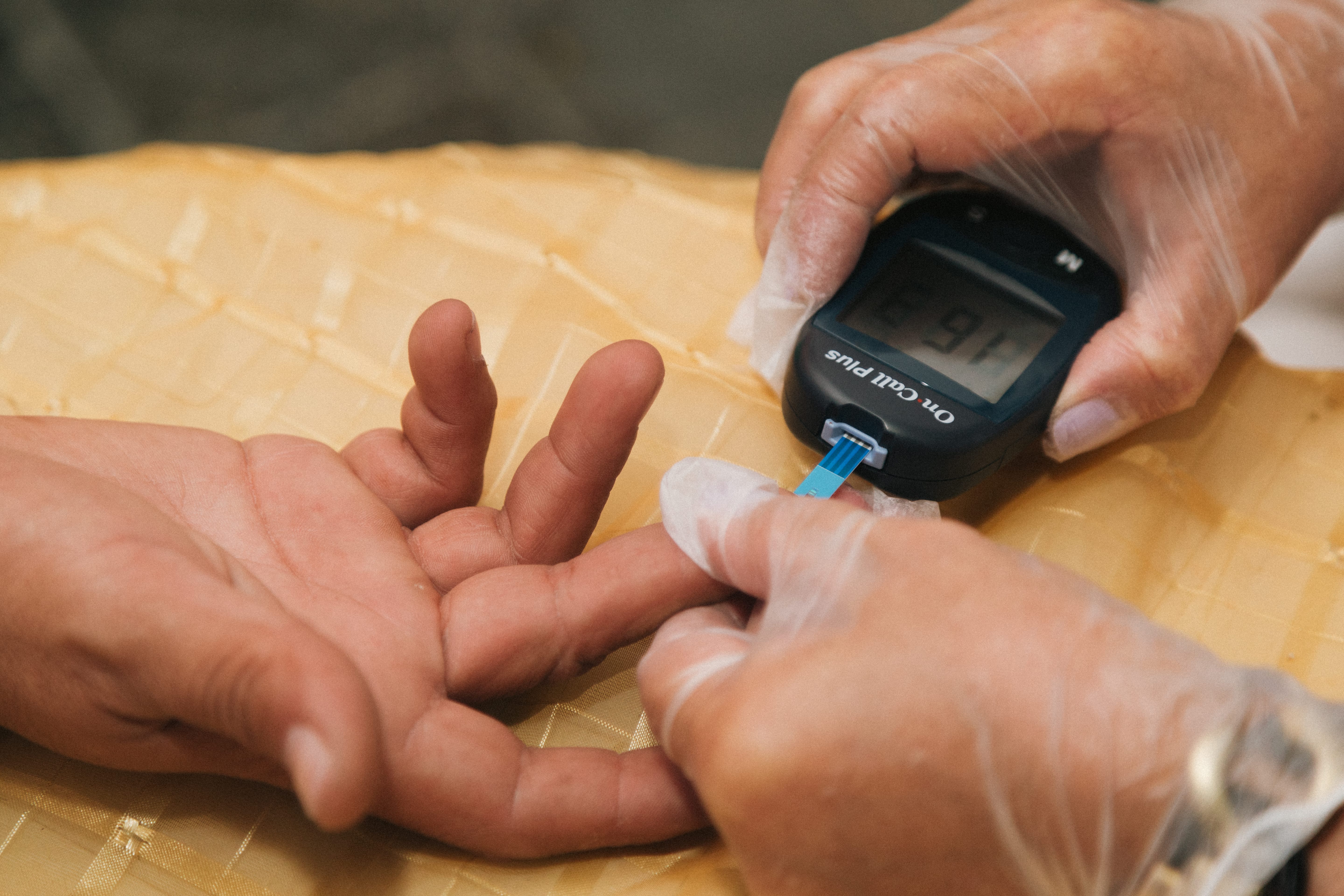
PCOS is one of the clearest examples of how sugar, insulin, and hormones interact.
In many women with PCOS - often with a hereditary component—insulin resistance is present early. When insulin stays high, it stimulates the ovaries to produce more androgens, sometimes called “male hormones.”
Too many androgens can show up as acne, excess facial or body hair, irregular cycles, or difficulty ovulating.
Sugar doesn’t cause PCOS.
But unstable blood sugar acts like fuel on an already busy control panel. Insulin gets loud, the hormonal orchestra loses balance, and everything feels chaotic.
When blood sugar stabilises, insulin stops shouting. And when insulin quiets down, the rest of the hormonal signals finally get a chance to be heard.
PCOS isn’t a discipline problem.
It’s a signaling problem.

Perimenopause & Menopause
This is the phase where many women say,
“Nothing works like it used to.”
Estrogen plays a quiet but powerful role in metabolism. It helps keep cells sensitive to insulin, buffers blood sugar swings, and supports muscle maintenance.
Think of estrogen as the friend who helps your chocolate cake turn into usable energy.
As estrogen declines in perimenopause and menopause, that buffer weakens. Blood sugar swings hit harder. Energy crashes come faster. Inflammation is triggered more easily.
That same cake that once became fuel now gets stored.
And here’s the piece most women never hear.
With age, everyone loses muscle mass. But estrogen plays a key role in maintaining muscle in women. Muscles are your body’s number one sugar customers. They love glucose and use it efficiently.
So imagine this: for decades, you’ve been baking the same number of cakes. But many of your best customers (muscle cells) have quietly disappeared.
Same production. Fewer buyers.
What happens? Storage.
This is why protein, strength training, and blood sugar stability become non-negotiable in this phase—not to control your body, but to adapt to new rules.
This isn’t failure.
It’s physiology.

The Big Picture
For women, sugar is never just about calories.
It’s woven into hormones, brain chemistry, emotional resilience, and reproductive health. That’s why the very same piece of cake can feel completely fine one day - and wildly overwhelming the next.
That doesn’t mean you’re inconsistent. It means your endocrine system is dynamic. Your cycle phase, life stage, stress load, and muscle mass all change how your body handles sugar.
That’s not weakness.
That’s biology doing its job.
Sugar cravings are not a character flaw. They’re information - your body sending you data about energy, timing, and support.
Once you understand that language, guilt becomes unnecessary. Regulation becomes possible.
In the next article we’ll explore all the practical “hacks” that help the body deal with insulin resistance, so you can enjoy your cookie or two - without the crash, the drama, or the shame.
Because a healthy relationship with sugar shouldn’t feel like a moral debate.
It should feel… human.