Meridians, Elements, and the Magic of Acupuncture—Made Simple
- Talia Dali
- Complementary Medicine & Hormones
A (Very) Brief History of TCM
Before we dive deeper, let’s rewind a few thousand years.
Traditional Chinese Medicine (TCM) wasn’t born in a lab or a university—it began with observation. People watched the world around them: the rhythm of the seasons, the rise and fall of the moon, the way rivers flowed—or didn’t. And they noticed something fascinating: the human body mirrored those same cycles.
Over time, this deep connection with nature evolved from early shamanic rituals into a practical, observational system focused on balance, flow, and harmony. About 2,000 years ago, this wisdom was written down in the Huangdi Neijing(The Yellow Emperor’s Inner Canon), still considered a foundational text in Chinese medicine today.
Through dynasties, revolutions, and modern science, TCM adapted—but never lost its core. Today, it doesn’t aim to replace Western medicine—it aims to complement it, offering a different lens through which to understand health. One that’s less about “fixing parts” and more about restoring the whole.
So… How Does Acupuncture Actually Work?
Let’s be honest: if you’ve never experienced it, acupuncture can sound a little… mystical.
Needles in your ankle to help with period pain? Your back pain linked to your liver? A tongue exam? It’s a lot to take in.
But don’t worry—this isn’t a crash course in Chinese medical theory. It’s just a peek behind the curtain to make things feel a little less mysterious.
First, a Word About Balance
At the heart of TCM is a simple idea: your body is always trying to maintain balance.
Not just work-life balance (though that helps too), but deep internal balance—the kind that keeps your hormones stable, digestion smooth, energy flowing, and emotions steady.
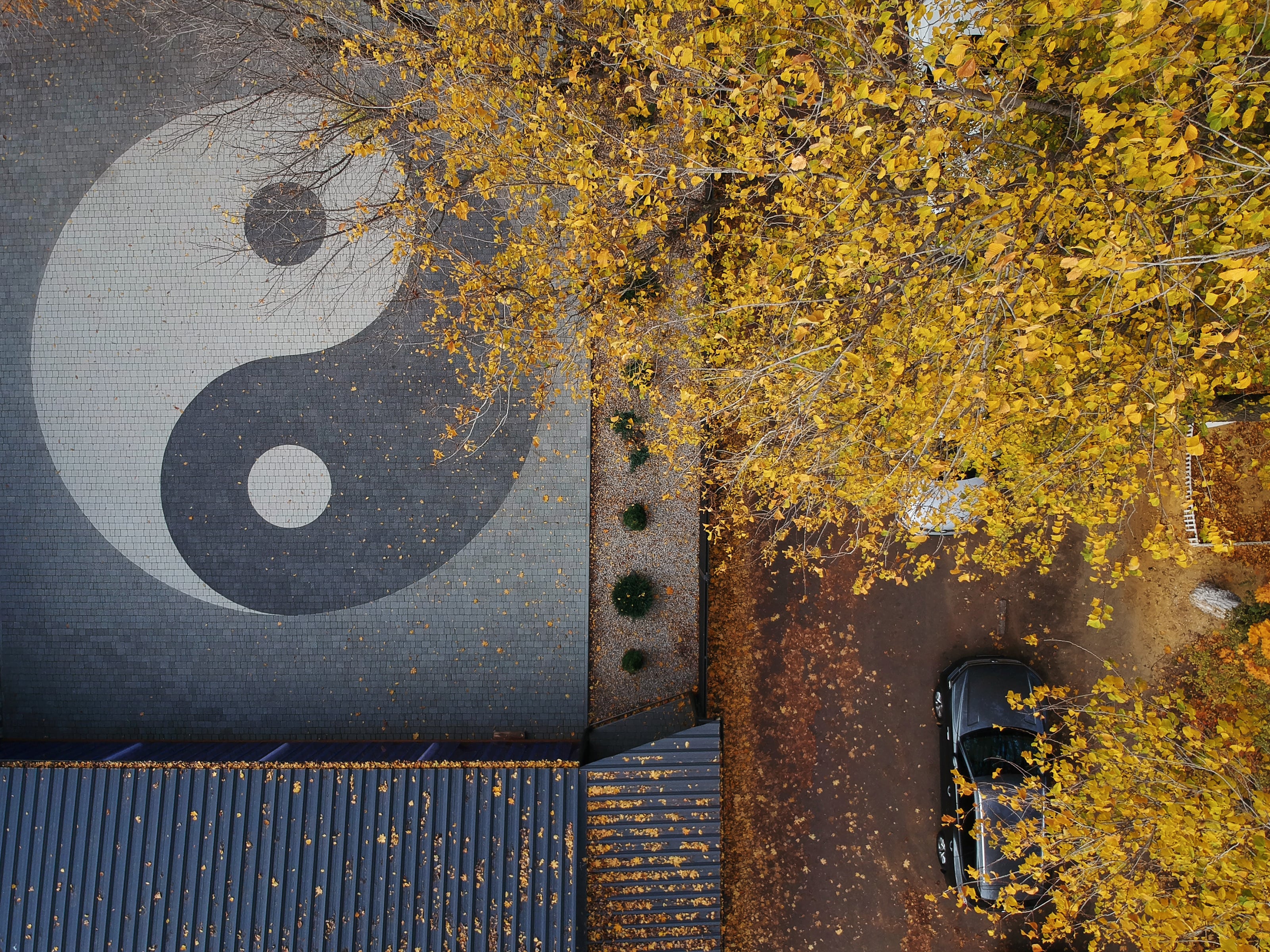
Enter Yin and Yang—that famous black-and-white symbol you’ve probably seen. But look closely: the line between them isn’t straight—it curves, like a wave. And inside each half, there’s a dot of the other. Why? Because nothing is ever fully Yin or fully Yang.
Day becomes night. Stillness turns to movement. Cold gives way to heat.
Health, in this view, isn’t a fixed state—it’s about rhythm, adaptability, and flow.
What Are the Five Elements (and Why Are There Five)?
TCM loves nature metaphors. While Western traditions speak of four classical elements, TCM works with five: Wood, Fire, Earth, Metal, and Water.
Why five? Because ancient observers saw life not in static chunks, but in continuous cycles:
• Spring becomes summer
• Summer shifts into late summer
• Then comes autumn, then winter… and back to spring again
Each element corresponds to specific organs, emotions, and functions in the body.
And Earth—linked to nourishment and digestion—is often placed at the center, harmonizing the others, like gravity holding the system together.
Don’t worry about memorizing them. What matters is this: your body is a web of relationships, not a list of disconnected parts. When one area is off, others feel it too.
What About Meridians and Acupuncture Points?
Think of meridians as your body’s invisible energy highways. You won’t see them on an X-ray, but in TCM, they’re how your body communicates internally—connecting organs, emotions, and systems in real time.
Each of the Five Elements is expressed through two organ systems, one Yin and one Yang, each flowing through its own meridian:
• Wood = Liver (Yin) & Gallbladder (Yang)
• Fire = Heart (Yin) & Small Intestine (Yang)
• Earth = Spleen (Yin) & Stomach (Yang)
• Metal = Lung (Yin) & Large Intestine (Yang)
• Water = Kidney (Yin) & Bladder (Yang)
These meridians don’t just connect organs—they reflect the element’s qualities in your body. They influence how you digest, move, rest, heal, express emotions, and relate to the seasons.
Along these meridians are acupuncture points—like exits off a highway.
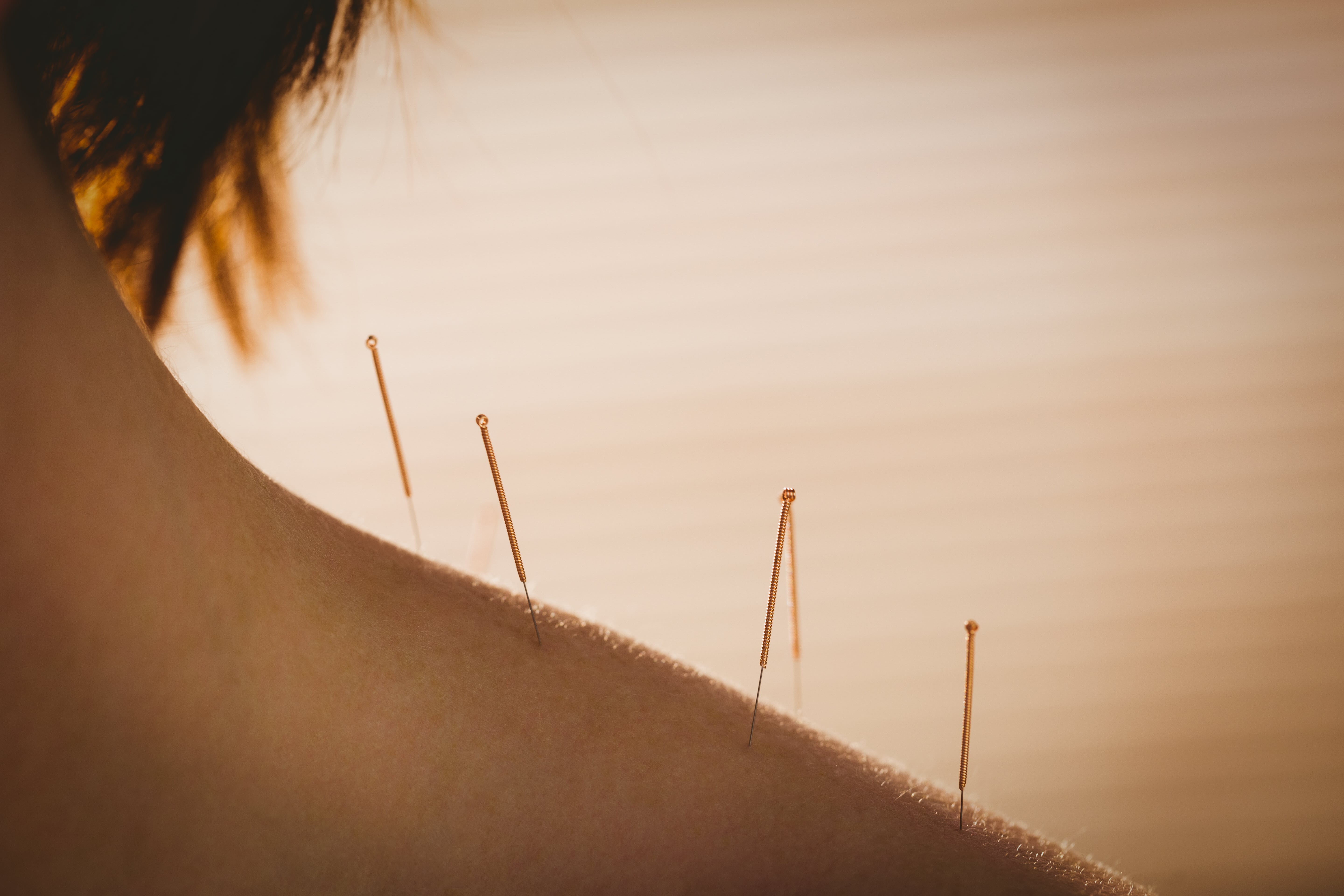
By stimulating them (with super-fine needles, moxa, or even gentle pressure), we can:
• Tonify or disperse energy
• Support organ function
• Calm the nervous system
• And most importantly—help bring the Five Elements back into balance
So, How Do I Use All This in My Practice?
There are many ways to practice acupuncture. Personally, I work with an approach called Unified Acupuncture Theory (UAT)—and here’s why I love it.
UAT is a modern method built on classical principles, especially the Five Elements. But instead of chasing symptoms or treating isolated points, UAT looks at the bigger picture: What’s out of balance, and how can we help the body restore harmony?
Each element has a Yin and Yang meridian. If one is deficient and another is overpowering it, I use a simple, elegant technique:
• Two needles to nourish the weaker element
• Two needles to calm the one that’s over-controlling
This is just one method within Unified Acupuncture Theory—there are other approaches too, depending the specific pattern being treated. Without getting too technical, the idea is always the same: to use the logic of the Five Elements to help the body find its way back to balance.
Because the Five Elements touch every part of you—your organs, emotions, energy, hormones—this approach works especially well for women’s health, whether it’s painful periods, fertility support, or navigating perimenopause.
UAT is all about working with your body, not against it. It’s not about fixing one thing. It’s about restoring the whole flow.
Why Does My Acupuncturist Look at My Tongue?
Fair question. In TCM, your tongue is like a dashboard—a non-invasive way to check what’s going on inside.
We look at:
• Color (pale, red, purple?)
• Shape (swollen, thin, teeth marks?)
• Coating (thick, greasy, missing?)
• Moisture, and which area of the tongue shows what.
Your tongue also holds a kind of health history—showing imprints left by past imbalances.
And no, we’re not judging your coffee stains. Promise.

And What’s the Deal with the Pulse?
When your doctor takes your pulse, they count beats per minute.
In TCM, it’s a bit more like reading braille.
We check three spots on each wrist, at different depths, and feel for qualities: is it strong? Tight? Slippery? Slow? Choppy?
Each pulse gives us a deeper look into your internal balance—how your organs are functioning, how Qi is flowing, and what your body may need to feel better.
It’s not just data—it’s a conversation with your system.
So… What’s the Point?
The point is: TCM doesn’t treat symptoms in isolation. It treats the body as an interconnected whole.
If you come in for painful periods, I’m not just thinking about your uterus. I’m thinking about your digestion, your sleep, your energy, your stress, and how all of it is working—or not working—together.
Acupuncture isn’t about “fixing” you.
It’s about inviting your body back into its natural rhythm.
And the best part?
Your body already knows how to heal.
Sometimes, it just needs a little nudge to remember how.