It’s Not the Cookie. It’s the Cortisol.
- Talia Dali
- Mental Health & Hormones, Food & Hormones
We’ve talked about sugar.
We’ve talked about insulin.
Now let’s introduce the third character in this hormonal soap opera:
Cortisol.
Also known as: stress.
If sugar is fuel and insulin is the key that lets fuel into your cells, then cortisol is the overprotective emergency manager who bursts into the room shouting, “Something’s wrong. Release the reserves!”
And for women, this manager can be very dramatic.
The Uncomfortable Truth
You can eat organic. Whole. Protein-balanced. Fiber-rich. You can cook lentils from scratch and feel morally superior to packaged snacks.
And still feel:
tired
foggy
puffy
irritable
wide awake at 3 a.m.
Because blood sugar is not controlled by food alone.
It is controlled by stress.
And stress is not just divorce, job loss, or a screaming toddler.
Stress also looks like:
skipping meals
under-eating
drinking coffee on an empty stomach
training like you’re preparing for the Olympics
sleeping five hours
pushing through exhaustion
trying to be perfect
Your body doesn’t care whether the tiger is real.
Forty-two unread emails? Tiger.
Didn’t eat enough? Tiger.
Didn’t rest? Tiger.
Physiology reacts the same way.

What Cortisol Actually Does
Cortisol’s primary job is simple: keep you alive by keeping fuel available.
When your brain senses stress, it signals your adrenal glands to release cortisol. Cortisol then ensures that glucose is available in the bloodstream. It does this by first mobilizing stored sugar from the liver. If stress continues or fuel stores are low, it can stimulate the production of new glucose from protein. At the same time, it temporarily makes cells a little less responsive to insulin so that sugar remains available for the brain.
Translation: even if you didn’t eat sugar, cortisol can raise your blood sugar.
No cookie required.
The Chain Reaction
When blood sugar rises, insulin rises. Insulin’s job is to move sugar from the bloodstream into the cells where it can be used or stored.
So the sequence looks like this:
Stress → Cortisol → Blood sugar rises → Insulin rises.
If this happens occasionally, the system works beautifully. The body is designed for short bursts of stress.
But when this pattern becomes daily and chronic, insulin has to keep knocking at the door. Over time, cells become less responsive. They don’t stop working; they simply don’t respond as efficiently.
That’s insulin resistance.
And here’s the key point: insulin resistance can develop from chronic stress alone — not just from eating dessert.
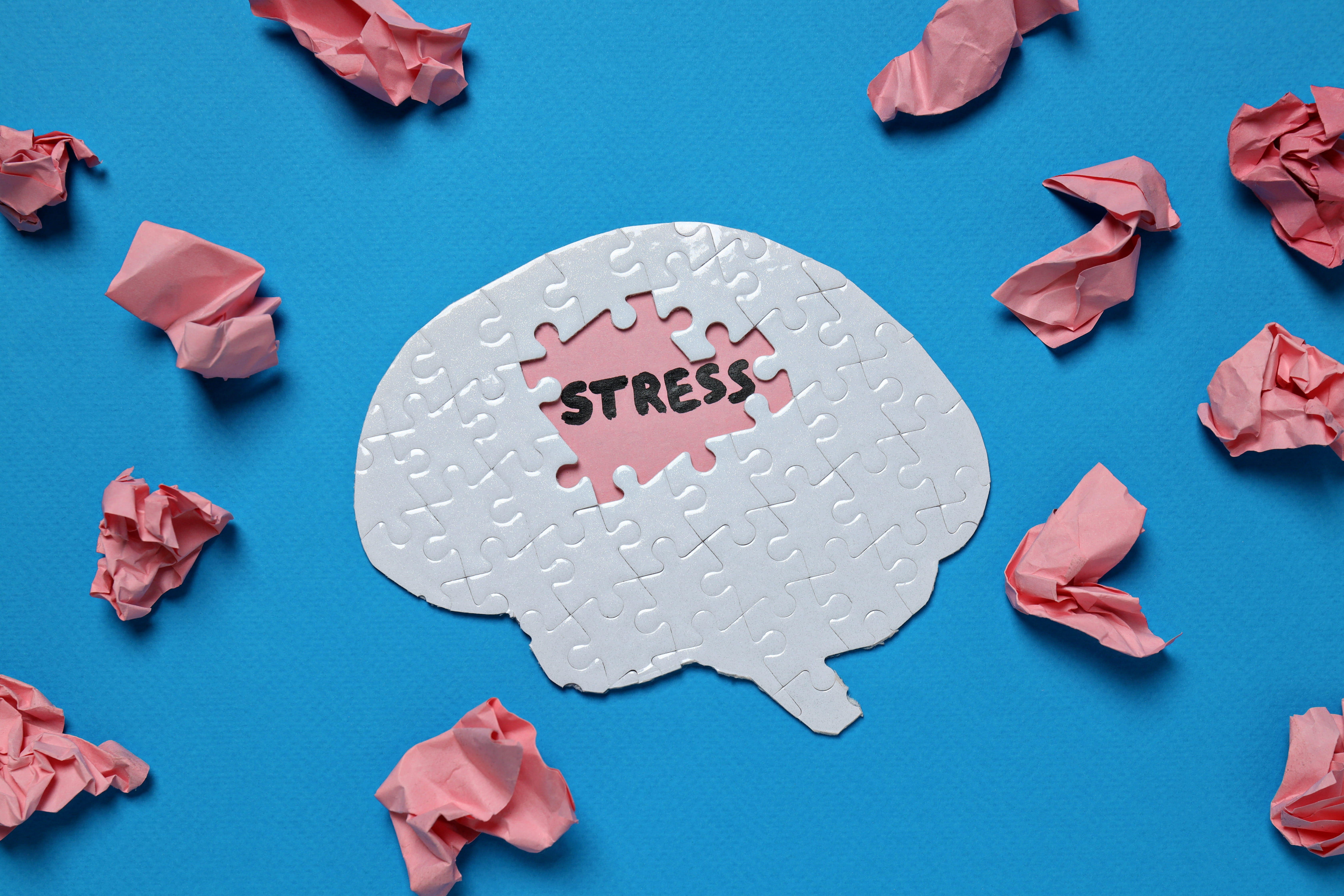
The Cortisol–Insulin Loop
Chronic stress keeps cortisol elevated. Elevated cortisol keeps nudging blood sugar upward. Insulin responds to lower it. If blood sugar drops too quickly, cortisol rises again to stabilize it.
The body enters a back-and-forth cycle.
This is why you may experience:
afternoon energy crashes
intense 4 p.m. cravings
stubborn abdominal fat
louder PMS
worsening PCOS symptoms
hot flashes that feel like anxiety
3 a.m. wake-ups
This isn’t a personality flaw. It’s a biochemical feedback loop.
Why Women Feel It More
When the body senses ongoing stress, reproduction becomes secondary.
Cortisol essentially says, “We are surviving. Now is not the time to invest in ovulation.”
As a result:
ovulation may weaken
progesterone may drop
cycle stability may shift
If stress continues long enough, cycles can shorten, become irregular, or pause entirely.
Your body isn’t broken. It’s prioritizing survival. Efficient. Slightly inconvenient.
The 3 A.M. Wake-Up
If you regularly wake between 2 and 4 a.m., this often fits the same pattern.
Blood sugar dips overnight — especially after under-eating, skipping dinner, or intense evening training. Cortisol rises to stabilize it. The brain switches on.
You wake up alert.
Your body is protecting your fuel supply, not sabotaging your sleep.

Perimenopause Changes the Equation
Estrogen normally supports insulin sensitivity and buffers stress responses. As estrogen declines during perimenopause, insulin regulation becomes less efficient, muscle mass gradually decreases, visceral fat tends to increase, and cortisol clearance slows.
The same lifestyle that once felt manageable may suddenly feel overwhelming. The same dessert may feel like it “lands differently.”
This isn’t failure. It’s altered physiology.
The Muscle Factor
Muscle is one of the most efficient users of glucose. It acts like a reliable customer for circulating sugar.
But chronic stress, aging, insufficient protein intake, and relying only on cardio without strength training gradually reduce muscle mass. With fewer places for glucose to go, blood sugar regulation becomes louder and more unstable.
This is why strength training after 35 isn’t about aesthetics. It’s about metabolic resilience.

The Emotional Layer
Many women operate in a state of continuous low-grade activation — planning, organizing, anticipating, caring. Even at rest, the mind often keeps running.
If the nervous system rarely down-regulates, cortisol remains slightly elevated. Not dramatically. Just persistently. Over time, that steady signal influences metabolism.
Stress doesn’t have to be extreme to have an effect. It simply has to be constant.

What Actually Helps
Not stricter dieting.
Not eliminating every sweet thing.
Not punishing yourself for cravings.
What helps is lowering overall metabolic stress and consistently signaling safety.
That means:
eating regular meals
consuming adequate protein
avoiding chronic under-eating
strength training two to three times per week
walking after meals
managing caffeine timing
reducing liquid sugar
prioritizing sleep before midnight
and perhaps most importantly, eating enough
When the body feels safe, cortisol lowers. When cortisol lowers, blood sugar stabilizes more easily. When blood sugar stabilizes, insulin responses become smoother. And when insulin is calmer, hormonal communication improves.
Sugar isn’t inherently the problem. Insulin isn’t the enemy. Cortisol isn’t your adversary. They are adaptive systems responding to input.
In chaotic conditions, they respond loudly.
In rhythmic, nourished conditions, they cooperate.
Women don’t need harsher rules. They need stability in a world that constantly promotes urgency.
When stress is regulated, sugar returns to what it was always meant to be:
Fuel.
Not drama.